Our new book, Produce Traceability Integrity, is here! View Book Details

FSMA 204 Guide

The Clock is Ticking... It's Time to Get Your Company Compliant with the FDA's FSMA 204 Food Traceability Regulations. Achieving compliance is critical for your business operations and safety status. Leverage our 20+ years of expertise to get it right.

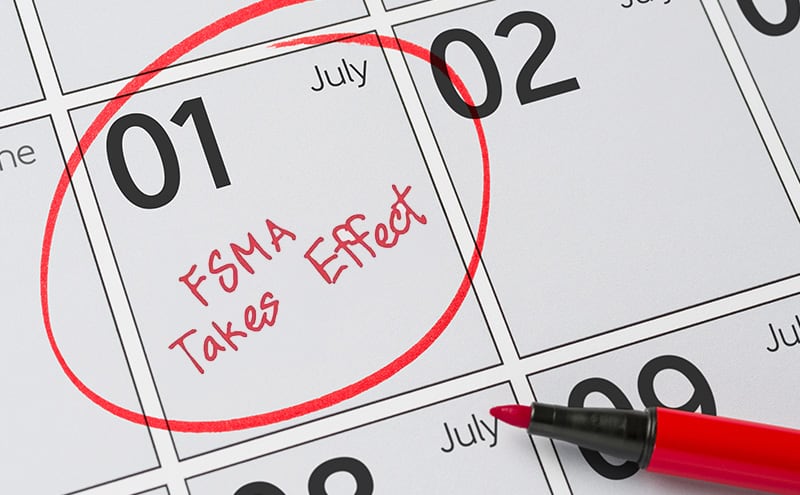
FSMA calendar showing July 26, 2028

FSMA Produce Traceability Final Rule is Here

The FDA Food Traceability Final Rules on record keeping and reporting rules, the Food Safety Modernization Act (FSMA) Section 204, are released, bringing new requirements for tracking and reporting items on the Food Traceability List. With many food retailers requiring early compliance, it’s time for growers/packers-shippers and distributors to act now to meet the July 2028 date.

Read Details

FSMA 204 Resources for Produce Traceability

Blog
Videos
FAQs
Watch our overview videos to learn more about what’s changing with food traceability and what products require you to record critical tracking events:
Why is Automated Data Collection Needed for FSMA 204?
How Do Companies Pay for Automated Data Collection?
The Food Traceability Final Rule implements Section 204(d) of the FDA Food Safety Modernization Act (FSMA), its purpose is to provide means to faster identification of potentially contaminated foods enabling rapid removal from the market, resulting in fewer foodborne illnesses and/or deaths.
The FDA’s FSMA Food Traceability Final Rule requires companies to maintain and provide records of Critical Tracking Events (CTE’s) in the food supply chain. In produce these include reference to harvest locations, receiving, cooling, initial packing, transformation, and shipping. Key Data Elements (KDE’s) of these events must be captured and maintained, and it must be provided to supply chain partners and the FDA as needed. Maintaining these CTE’s and KDE’s are new additional requirements beyond just applying and recording PTI Harmonized Traceability Case Labels.
The Food Traceability Final Rule applies to persons who manufacture, process, pack, or hold foods on the FDA’s Food Traceability List (FTL). It covers domestic as well as foreign firms producing food for U.S. consumption, along the entire food supply chain.

Leading retailers are expected to require the same level of traceability for all their fresh produce citing challenges and liabilities of managing different traceability processes within the produce department.
Most vegetables, nut butters, and fish products are covered. The complete list is available on the FDA’s Food Traceability List.
The compliance date for the new FSMA record keeping requirements is July 20, 2028, but retailers are pushing produce and other food suppliers to be compliant much sooner. If you are subject to these new rules, you need to get to work right away to ensure you’re ready to meet retailer requirements and protect your business.
To ensure compliance, you must capture and maintain Key Data Elements (KDEs) that record Critical Tracking Events (CTEs) in the food supply chain, and you must create a written Traceability Plan and assign Traceability Lot Codes (TLCs) where required. The best way to do this is by using digital software, data capture and tracking technologies to help automate the process.

Critical Tracking Events (CTEs) include the following activities in the food supply chain:

  • Harvesting
  • Cooling
  • Initial packing
  • First land-based receiver (for fish)
  • Transformation
  • Shipping

Key Data Elements (KDEs) have specific requirements based on the Critical Tracking Event (CTE), but generally they must include:

  • The activity location
  • The commodity and variety (if applicable)
  • A date and reference document
  • Traceability lot codes (at Initial Packing)
  • Product descriptions (at Initial Packing)
  • Receiving

Traceability Lot Codes (TLCs) are alphanumeric descriptors used to uniquely identify a traceability lot within your firm’s records. TLCs must be assigned to foods when you:

  • Initially pack a raw agricultural commodity (RAC) other than a food obtained from a fishing vessel
  • Perform the first land-based receiving of a food obtained from a fishing vessel
  • Transform a food
  • Receive a covered food from an entity that is exempt from the final rule

Once a food has been assigned a Traceability Lot Code (TLC), the Key Data Elements (KDEs) records required at each Critical Tracking Event (CTE) must include that TLC.

A written Traceability Plan is required for all FTL foods and must include a description of the procedures you use to maintain the required records, including the format and the location of the records. Your plan must include:
  • A description of the procedures you use to identify foods on the FTL that you manufacture, process, pack or hold
  • A description of how you assign traceability lot codes to foods on the FTL, if applicable
  • A statement identifying a point of contact for questions regarding your traceability plan and records
  • A farm map showing the areas in which you grow or raise FTL foods (other than eggs)
    • The farm map must show the location and name of each field in which you grow an FTL food, including geographic coordinates and any other information needed to identify the location of each field or growing area. This info only needs to be provided to the initial packer, and it can be a web link if applicable.
  • Regular updates as needed to ensure that your current practices are reflected and compliant with the FDA’s rules
  • Records of your previous two years of traceability plans after you update your plan
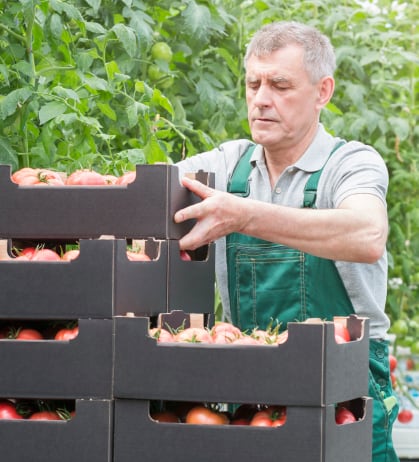
Man in overalls stacking boxes of tomatoes in a greenhouse.

What About the Written Traceability Plan?

The new FDA-mandated produce traceability requirements are coming and achieving compliance does not have to be stressful or time-consuming.

With RedLine Solutions - and our over 20 years of experience in produce traceability - we will help your company comply with the FSMA 204 requirements affordably, effectively and on time.

Get a Consultation
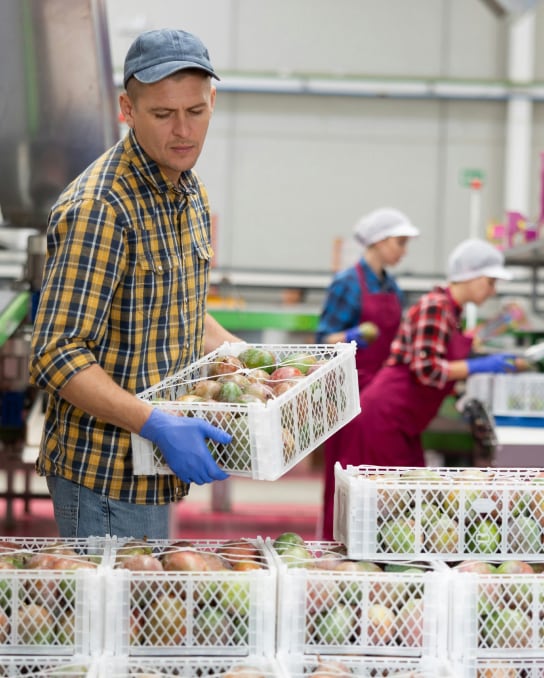
Two individuals in lab coats and hairnets inspect a document in a food processing facility.

Why choose RedLine Solutions?

Our seasoned professionals will provide your company with the expert guidance, technological savvy, and commitment to customer support to thrive in this changing landscape
The RedLine management teamContact Us
Star Icon
Simplified, straightforward and personlized advice:
With customers across North America, we know firsthand that your unique operation has unique requirements. Our team is here to find a solution for your problems, not just sell you hardware
Computer 1 Icon
Software to help you manage your workflows, improve your employees productivity, and collect and report required data
Automating data collection normally achieves at least a 25% productivity gain and achieves an ROI in a year
Time and stress-free hardware, software, and support services.
FSMA 204 compliance requires your company’s attention, so don’t wait until the last minute.

Get on the Fast Track to Compliance with MyProduce™

MyProduce™ is a simple, easy-to-use and powerful software solution that helps growers, shippers and distributors meet the newest food traceability requirements. Run stand alone or integrated with your existing Accounting or other systems.
  • Capture, Track and Report the CTE’s and associated KDE’s
  • Managed workflows to ensure data is collected and validated
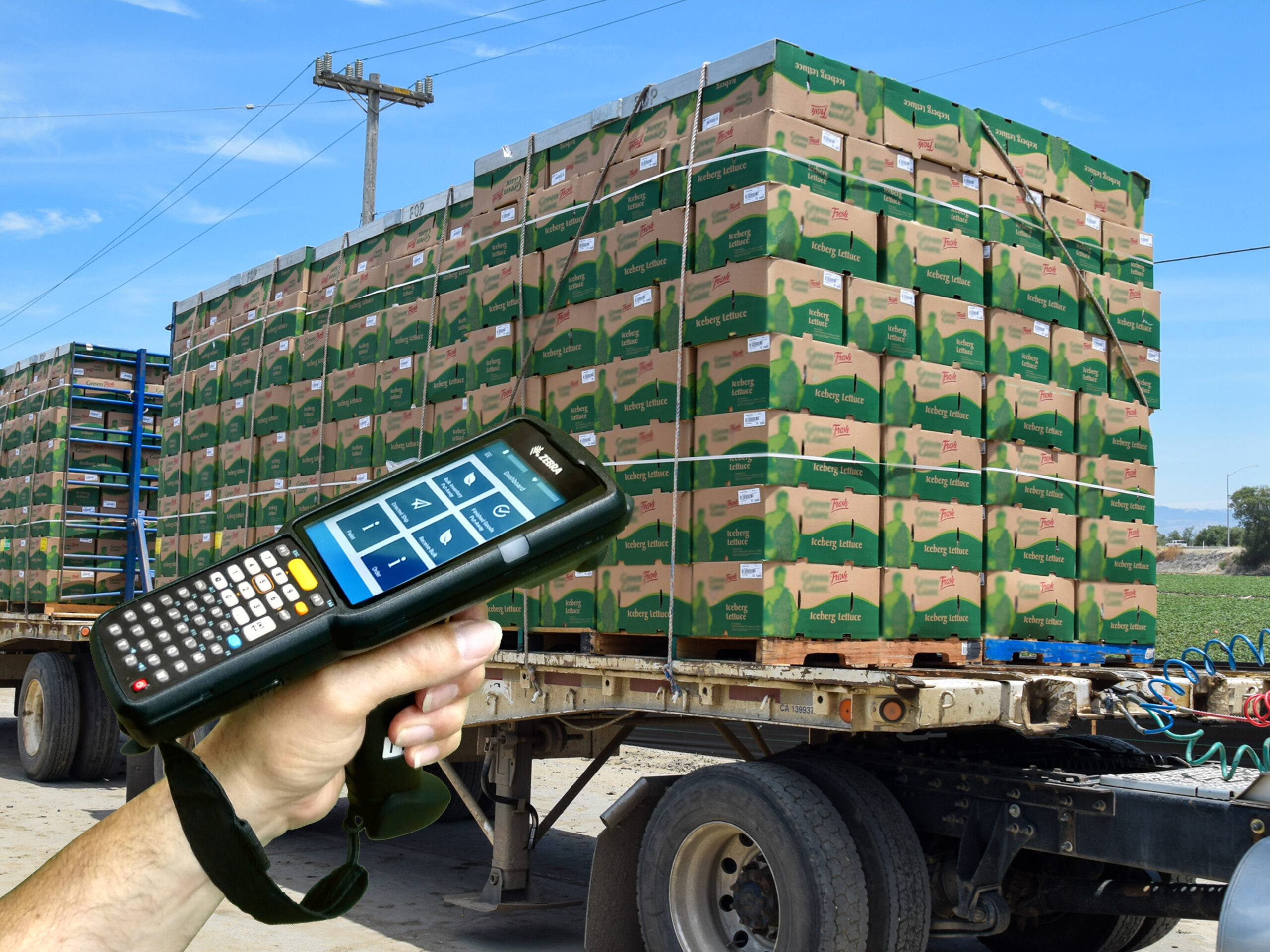
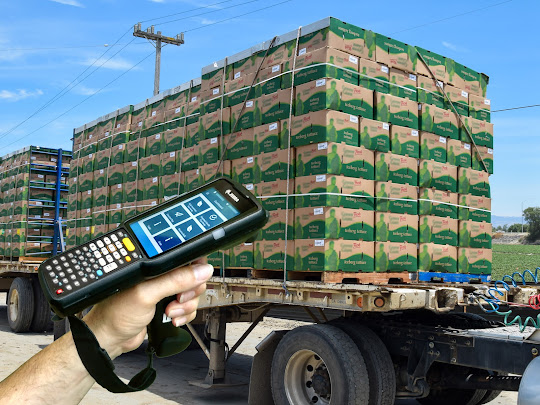
  • Scan barcodes to automatically track and validate products, linked to CTE’s and KDE’s
  • Easily print case labels in multiple formats, including Harmonized Traceability Case Labels
  • Access your software on PC’s, Tablets or cell phone via the web
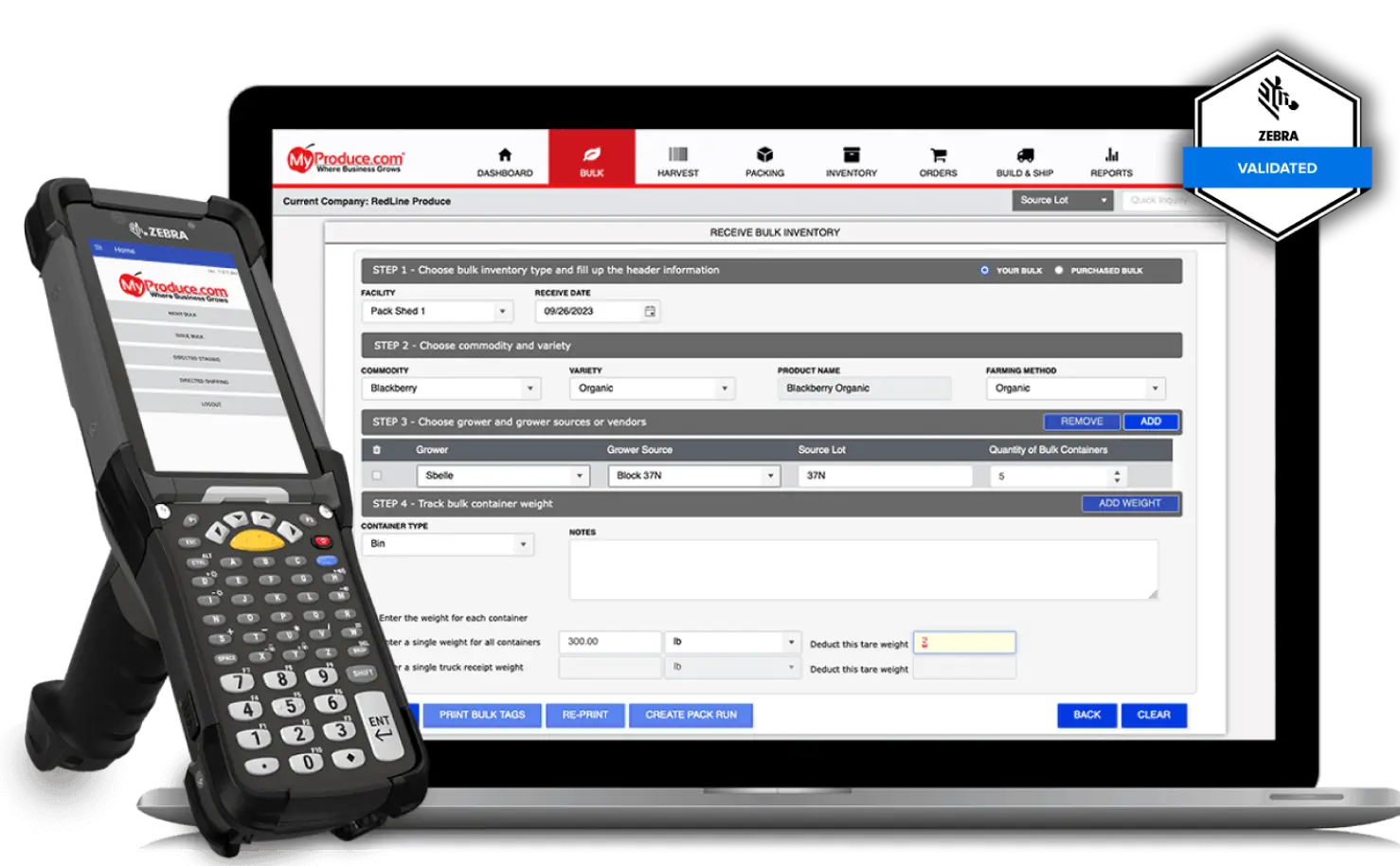
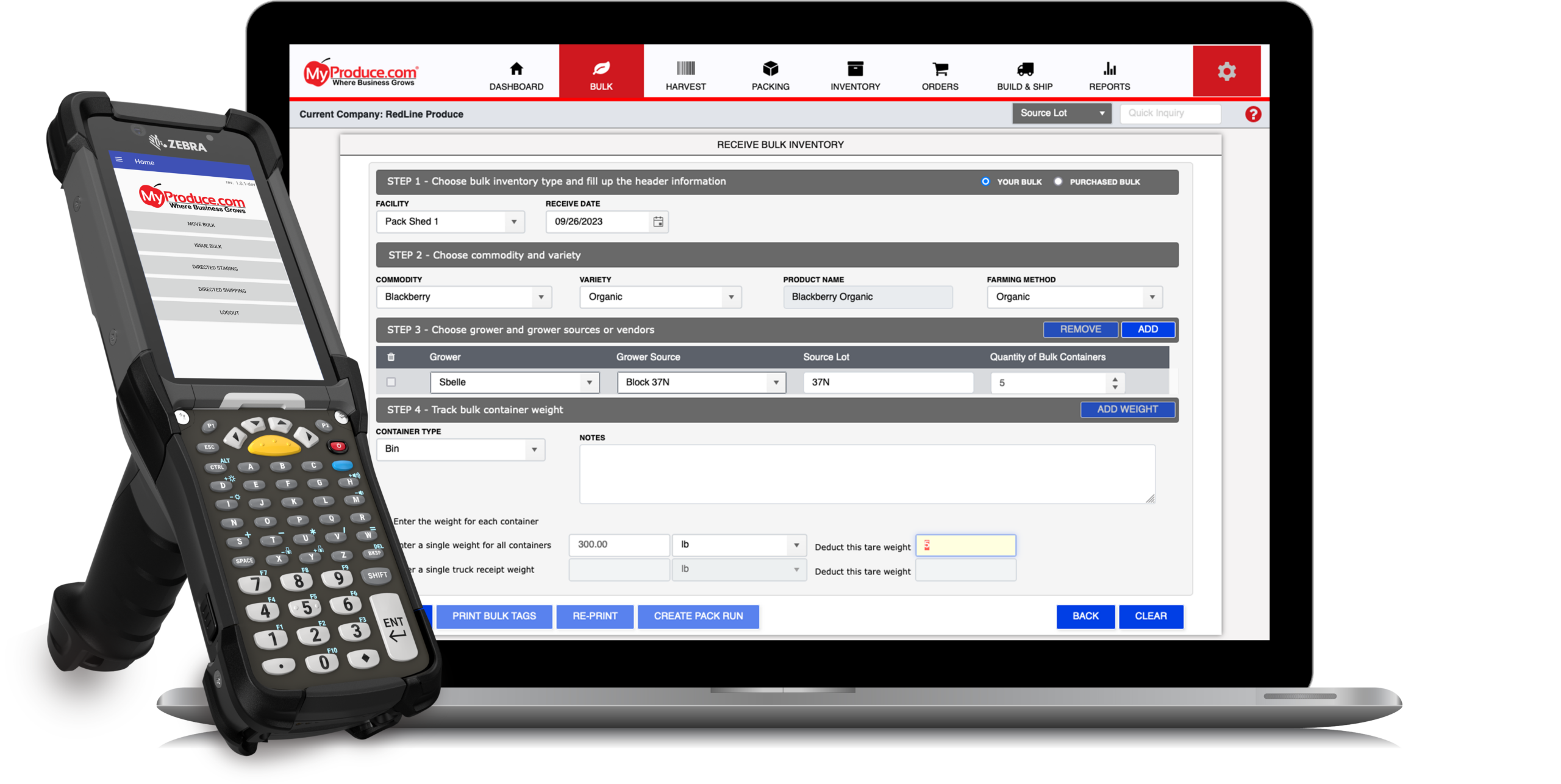
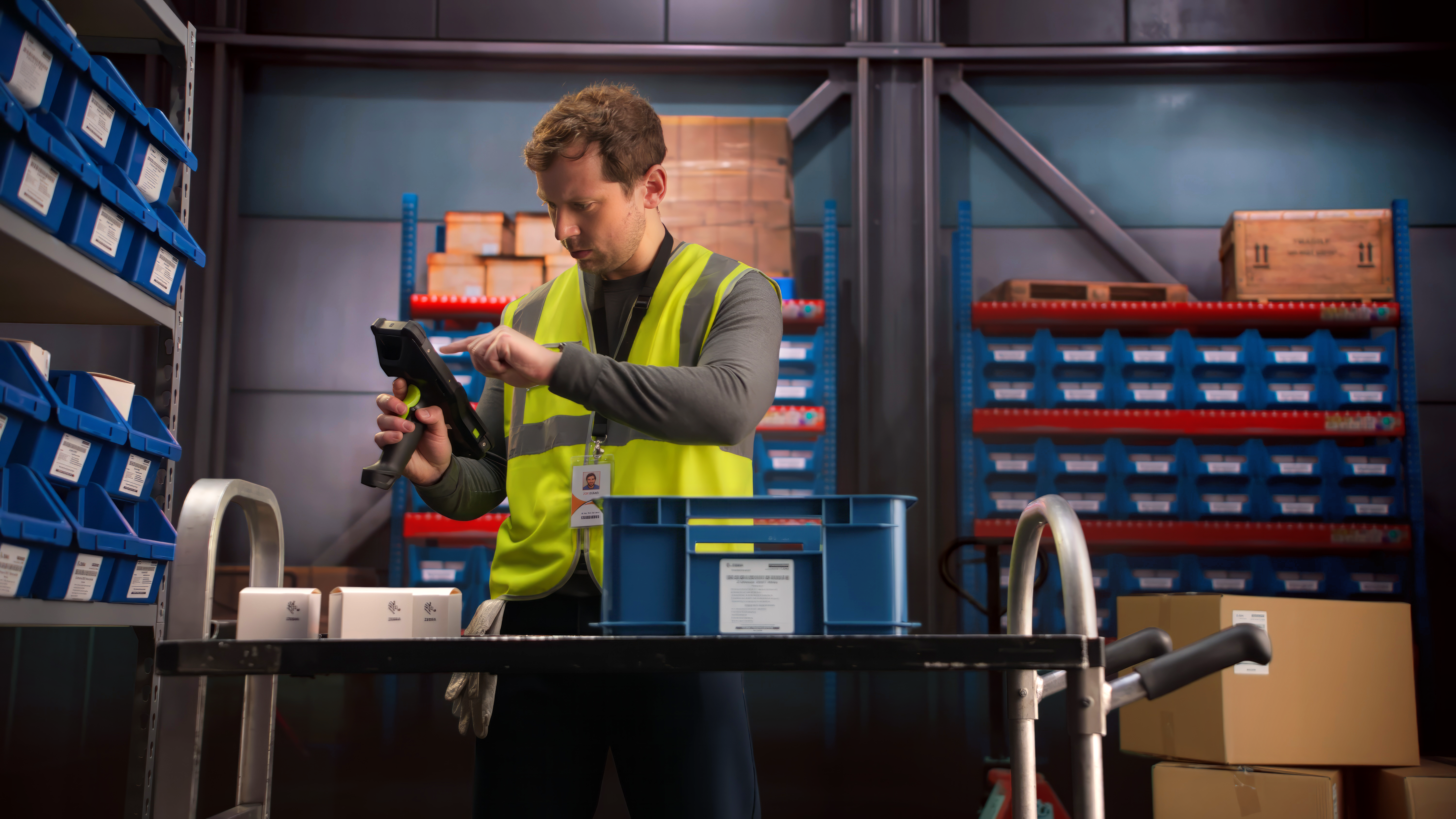
Handheld barcode scanner and laptop displaying an inventory management software interface from MyProduce.com.

Feeling FSMA Challenged?

Don’t be, we’ve got you covered. Contact us to see how. Call 408-562-1700 or complete the form below for a free consultation.

We answer all inquiries within 24 hours! We value your privacy and will never share your contact information.
cross