
Most packer-shippers are already familiar with mock recalls and conduct them with their retail customers either as scheduled or in response to random requests. These exercises have long been part of good food safety discipline.
What FSMA 204 introduces is a different kind of expectation.
The question is no longer just whether you can trace a product back through your supply chain. The question is whether your system can produce complete, sortable traceability records within 24 hours, containing all required applicable Critical Tracking Events (CTEs) and Key Data Elements (KDEs) associated with a specific Traceability Lot Code (TLC).
That difference changes the operational expectations inside packinghouses and distribution facilities.
For produce operations, pallet content verification is the key physical checkpoint before product leaves the facility. Pallet content must be tracked as built or changed. Once the truck pulls away from the dock, shipment records become the primary traceability reference point.
Under FSMA 204, shipment records must clearly connect the product that left your facility to the traceability information that defines its origin and movement through the supply chain.
For shipments involving commodities on the FDA’s Food Traceability List (FTL), the shipment record must be able to associate:
The objective is not simply to produce shipping paperwork. The objective is to demonstrate a defensible connection between what physically shipped and what the traceability system says was shipped. And while the FDA is focused on FTL items most retailers have already stated they will want this information for all fresh produce products.
If those two do not align, traceability breaks down at the point where regulatory scrutiny begins.
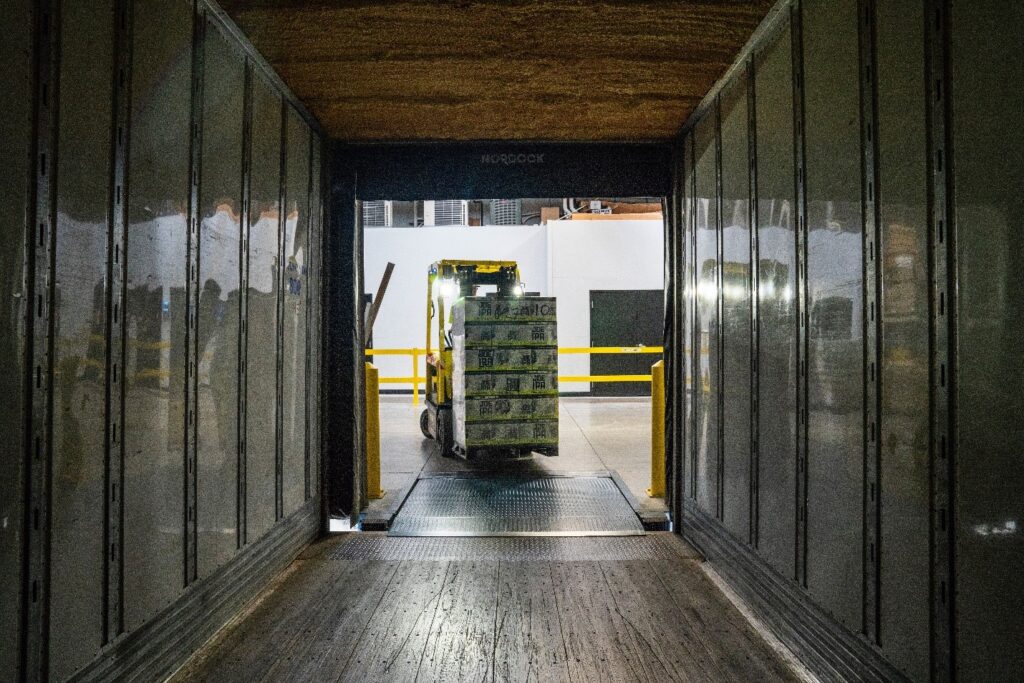
Many packing operations still rely on processes that were designed for internal logistics rather than regulatory traceability compliance.
Shipment information may be:
These processes often work well enough for today’s operations but, under the pressure of a regulatory request, they create delays and the need to reconstruct records after the fact.
When shipment data must be reconstructed rather than retrieved, the reliability of the traceability system becomes questionable. That is why the 24-hour requirement in FSMA 204 is less about speed and more about system design.
A useful way to evaluate whether your current system is inspection-ready is to ask a simple question:
If FDA called today requesting traceability documentation for a specific TLC shipped last week, could your system immediately answer the following questions?
If answering those questions requires investigation, spreadsheet analysis, or manual reconstruction, your system may not yet meet the requirements of FSMA 204. Inspection ready systems should allow these records to be retrieved quickly and confidently.
The produce industry has long demonstrated strong operational discipline in areas such as food safety, quality control, and recall preparedness. FSMA 204 builds on that foundation by requiring a more structured approach to how traceability data is captured, maintained, and retrieved.
The key to meeting this requirement is not better filing practices or faster administrative response. It is about your system’s architecture, the way your data flows. Traceability systems must align operational activities (receiving, cooling, packing, palletizing, and shipping) with the digital records that document those activities. When data is digitally captured as the the work occurs, shipment records become an extension of the operational process rather than an administrative reconstruction, and when that alignment exists, the 24-hour response requirement becomes achievable without stress.
When regulators request traceability records, they are not just evaluating documentation. They are evaluating whether a system exists that can reliably connect product activity and movement to the records that describe it.
Operations that capture traceability data in real time, enforce disciplined workflows, and maintain clear connections between grower lots, harvest locations, packed case TLCs, and shipments are able to respond with confidence.
Operations that rely on manual processes often discover weaknesses only when they are forced to reconstruct events under pressure.
The operations that approach FSMA 204 with the perspective that this is a challenge to their system design will be the ones that move from basic compliance to true inspection ready traceability.
FSMA 204 Readiness Checklist
A Quick Self-Assessment for Packer-Shippers
If FDA requested traceability documentation for a specific Traceability Lot Code (TLC) today, could your system immediately demonstrate the following?
☐ Shipment records clearly associate each TLC with the product shipped
☐ The Grower and Harvest Location tied to each TLC are documented
☐ Initial cooling date and location are recorded when applicable
☐ Shipment records include items, quantities, unit of measure, and shipping location
☐ The immediate subsequent recipient’s full address is captured
☐ Supporting reference documents are linked to each shipment
☐ All associated Critical Tracking Events (CTEs) are recorded
☐ All required Key Data Elements (KDEs) are available in a sortable electronic format
☐ Pallet verification confirms that physical product matches shipment records
☐ Traceability data is captured in real time, not reconstructed later
What Your Answers Mean
All boxes checked: Your system is likely moving toward inspection-ready traceability.
Some boxes unchecked: Your traceability process may still rely on manual reconstruction or disconnected records.
Unsure: Your operation may benefit from conducting a full FSMA 204 readiness assessment.
Remember: The 24 hour rule is not a typing speed test. It is a system design test.
For 27 years, RedLine Solutions has been the trusted partner in inventory and traceability for fresh produce stakeholders across North America. Serving a myriad of commodities, we tailor solutions to your workflow. Our offerings, from hardware to software, coupled with deep expertise, ensure your produce operations management is in the best hands.
