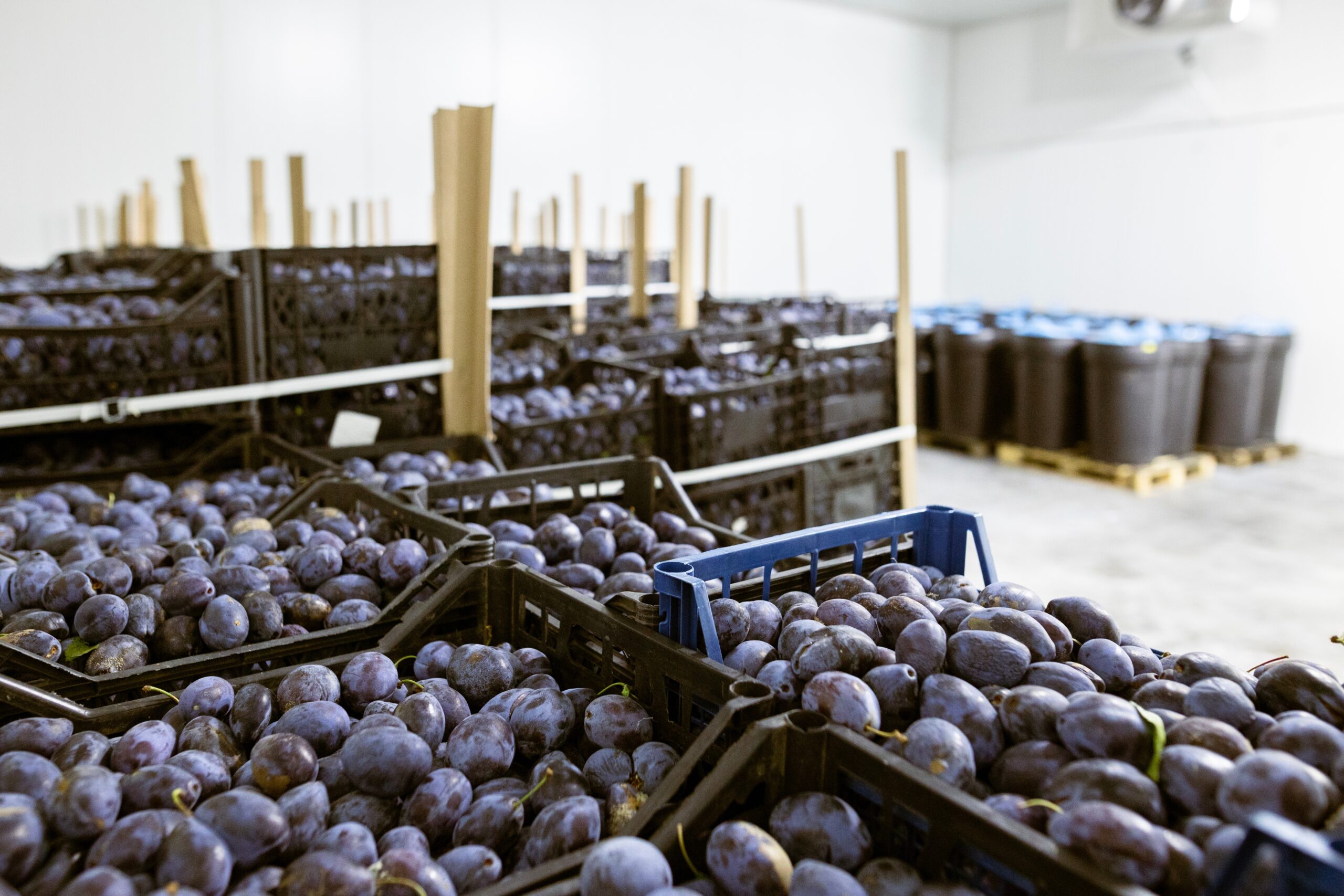
If you operate a shed-pack facility, this is where your FSMA 204 readiness will either hold or fracture. Inbound product arrives under a Grower Lot tied to a specific Harvest Location. Your Traceability Lot Code (TLC) is typically assigned later, when finished cases are packed. That means bulk storage sits between harvest and case-level traceability, and is the first hurdle your record keeping needs to clear.
In most shed-pack environments, bulk products move quickly:
On a busy day, dozens, sometimes hundreds of bins are repositioned, stacked, and fed to multiple packing lines.
Now ask yourself:
This is where operational habits usually begin to collide with regulatory precision. Under FSMA 204, your finished case Traceability Lot Code must maintain a defensible link back to the original Grower and Harvest Location. If bin level control is weak, that linkage is compromised before the TLC is ever issued. Once a compromised TLC is issued, that murky data will be sent downstream.
In reviewing shed-pack operations, I consistently see the same pressure points.
1. Side-by-Side Staging Without Clear Separation
Macro bins from different Grower Lots are staged in adjacent rows. As packing demand shifts, forklift operators pull what is closest or most accessible. If bin labeling is missing, inconsistent, or not verified digitally, the line may unknowingly receive product from multiple Grower Lots. When that happens, your future TLC may span more source lots than intended.
Recall scope begins quietly expanding.
2. Bin Repositioning Without Digital Capture
Cold storage is dynamic. Bins are moved to make space, rows are rearranged and restacked, product is shifted closer to lines.
If these movements are not captured electronically at the moment they occur, traceability depends on memory and paper logs. In a real traceback investigation, “We believe it came from that grower lot” is not defensible documentation.
FSMA 204 requires you to provide accurate KDEs tied to specific CTEs.
When bin location history is reconstructed after the fact, precision suffers.
3. Partial Bin Consolidation
Space pressure drives consolidation. Partial bins from the same commodity may be combined.
Sometimes they are from the same Grower Lot.
Sometimes they are not.
If consolidation occurs without lot verification, Grower Lot boundaries blur and from that moment forward, your downstream TLC is broader than it should be.
When contamination is isolated to one original Grower Lot, but your TLC spans three because of consolidation practices, you’ve multiplied recall exposure unnecessarily.
4. Feeding Multiple Grower Lots Into a Single Packing Run
Operational efficiency often drives packing decisions.
Lines run continuously. Bins are fed based on availability.
If the transition between Grower Lots is not clearly defined and digitally captured at the line, the Traceability Lot Code assigned to cases may unintentionally span multiple harvest events.
In some commodities, such as avocados, multiple grower bins are presorted and combined. When this happens, your downstream TLC has expanded and must be traced with precision.
Here’s the critical part:
Once the TLC is printed on cases, the expansion is locked in. Your system now treats that broader product range as one traceable unit. If a recall occurs, the entire TLC is implicated, even if the root issue originated from a single harvest location.
Under the rule, you must maintain records that establish:
In a shed-pack model, the linkage between Grower Harvest Location and finished TLC is the critical bridge. If your bulk storage discipline is weak, that bridge becomes structurally unstable and during an FDA records request, this instability becomes exposure for your operation. The 24-hour rule magnifies this risk.
If you cannot confidently map a finished TLC back to specific Grower Lots and Harvest Locations without widening the scope “just to be safe,” your system is not inspection ready. So, what do you do? Make sure bin level discipline is a core part of your workflows.
Strong shed-pack traceability systems incorporate the following:
These additional steps aren’t there to frustrate your workers or slow down your workflows, they’re meant to protect you in case the FDA comes and requests records. This is where Electronic Data Collection (EDC) becomes critical. It allows forklift operators to scan bin identifiers before staging or feeding lines resulting in:
Let’s put this in practical terms.
If one Harvest Location produces 3,500 cartons and a contamination event affects only that lot, a well-controlled system isolates that product.
If bulk storage practices cause that harvest to be combined into a TLC spanning 14,000 cartons across multiple Growers and harvest locations the recall scope expands.
That impacts:
In many cases, the expansion is preventable.
The difference between a surgical recall and a sweeping one is rarely decided during the crisis, it is decided weeks earlier in how bins were staged, labeled, and verified. Remember, bulk storage is not neutral space.
In shed-pack operations, bulk storage often feels transitional. It’s not. It is an active traceability control zone that FSMA will be requiring proper tracking for. If Grower Lot integrity is not maintained there, every downstream process inherits expanded risk.
The strongest grower-shippers treat bulk storage as a formal Critical Tracking Event environment, even if it is not explicitly labeled that way operationally.
If you selected one finished TLC from last week and traced it back to the exact bins that fed the line, could you do so without assumption?
That answer tells you whether bulk storage is protecting your operation or quietly expanding your recall exposure.
For 27 years, RedLine Solutions has been the trusted partner in inventory and traceability for fresh produce stakeholders across North America. Serving a myriad of commodities, we tailor solutions to your workflow. Our offerings, from hardware to software, coupled with deep expertise, ensure your produce operations management is in the best hands.
